Cat Hair in the Air: Why It Floats and What Catches It
Why hair shows up on surfaces no cat has ever touched. What an air purifier can and can't do. And the fan problem I'm still working on.
Cat hair on every surface in the house feels like an air problem. It mostly isn't. Cat hair is too heavy to fly very far. What feels like "hair in the air" is usually a brief flight from the cat to the floor, with a stop on a couch on the way down.
Part of it is in the air, though. The smaller stuff. Broken fragments of hair, the lightest of the loose undercoat, dander, and the Fel d 1 protein that triggers cat allergies. Those drift for hours and land wherever the air currents send them. That's why a shelf in a room you barely use still ends up dusted with fine particles that look an awful lot like fur.
This is the guide for the airborne side of the problem. What actually stays in the air. What an air purifier can and can't do. And the one device in the house that gives all of it a place to land: the fan.
The science, briefly
What stays in the air, and what doesn't
A single cat hair is about 30 to 80 micrometers thick and a couple of centimeters long. That's a relatively heavy strand. It will catch a draft and drift across a room, but most of it lands within minutes. Static charge in dry winter air slows the drop and pulls some of it onto fabric on the way down.
What stays airborne for hours is much smaller:
- Cat dander. Microscopic skin flakes, typically 2 to 10 microns. These are what allergic people react to.
- Fel d 1. The cat allergen protein, secreted in saliva and skin. Carried on dander particles. The most common cause of cat allergies.
- Hair fragments. Broken bits of hair, often a few hundred micrometers long. Light enough to drift on air currents.
- Litter dust. Particularly with clay-based litters, fine clay particles ride the air after every box visit.
- Carrier dust. Whatever the cats track in from outside, or stir up from rugs.
This is the cloud an air purifier addresses. Hair on your couch is downstream of a different problem (a brushing or vacuuming problem), but the fine particles your couch hair is mixed with do circulate, and they're worth filtering.
Reality check
What an air purifier can and can't do
What it can do:
- Capture airborne dander, Fel d 1, dust, and small hair fragments.
- Reduce the visible airborne haze you can see in a sunbeam.
- Help with cooking smells, smoke, and litter odor when paired with a carbon filter.
- Make a measurable difference for cat-allergic people who live in the home. Multiple HEPA studies show meaningful Fel d 1 reductions in sealed rooms.
What it cannot do:
- Pull hair off your couch, your bed, or your clothes. Fabric is a much stronger trap than the air around it.
- Filter an entire open-plan house unless the unit is rated for that square footage.
- Stop hair from showing up on surfaces. That's a brushing, vacuuming, and bedding problem. (See the main cat hair guide, the remove cat hair guide, and the bedding guide.)
- Replace a vacuum, a roller, or a brush.
If you bought an air purifier expecting it to keep your couch hair-free, you bought the wrong tool. Buy one for what it does (make the air better), and address the hair on surfaces with the right tools.
Practical
Where to put it and how to maintain it
- Place it in the room you spend the most time in. An air purifier is only filtering the air in its room. If your cats live in the living room and your purifier lives in the bedroom, your bedroom is great and your living room is unchanged.
- Don't shove it in a corner. Most units pull air in from the bottom or sides; blocking those drops effective CADR. Six inches of clearance on every side, minimum.
- Run it on auto, not constant max. Max-mode lifespan is shorter, the noise is worse, and modern auto-adjust is good enough. Reserve max for after a brushing session or a litter cycle.
- Vacuum the pre-filter every few weeks. The pre-filter catches the largest debris and hair fragments. If it loads up, the HEPA layer works harder for less. Most units pop open in seconds. Vacuum the mesh, don't rinse it unless the manual says so.
- Replace the HEPA cartridge on schedule. Cat homes load filters faster than the marketing numbers assume. If the indicator says "replace," replace it.
- Pair with floor cleaning. Air purifiers do less when the floor is full of dander to kick up. A regular vacuuming routine pulls more out of the air than a purifier alone ever will.
For the floor side of that pairing, the Dyson 360 Vis Nav review covers the only robot vacuum I've owned with enough suction to keep up with a three-cat house. Brushing the cat reduces airborne dander at the source; the FURminator vs EquiGroomer comparison covers which deshedder pulls the most fur with the least drag.
Still unsolved
The fan problem
This is the part of the cat-hair problem nobody has solved well. Fans pull air across their blades. Hair suspended in that air gets pressed against the blade leading edges, where the static charge of the spinning plastic holds it in place. Over a week or two, the blades cake. The fan now has a layer of fur it gradually breaks off into smaller particles and blows back into the room.
This happens to every household fan I own. Box fans, oscillating pedestal fans, tower fans, table fans. It happens fastest on cheap plastic blades because they hold more static, but it happens to all of them eventually.
Things people try, and why none of them are great:
- Pillowcase over the front. Catches some hair, but kills the airflow and looks bad. The whole reason you bought a fan was for airflow.
- Wipe the blades with a dryer sheet. Reduces static for about a day. Then back to baseline.
- Vacuum the blades weekly. Works, but it's a chore I forget. By the time I notice the blades are caked, they've already been blowing dusty hair around for days.
- Generic "fan covers." Most are designed to keep fingers out of fans. They aren't built for this job.
I'm working on something. Drop your email below if you want to know when it's ready.
Want the fan update when I find something?
I'll only email when there's a real recommendation worth sharing. No weekly newsletter, no spam.
One-tap unsubscribe in every email. See the privacy policy.
Frequently asked
FAQ
Will an air purifier remove cat hair from the air?
Partially, and not the way most people expect. Cat hair itself is too heavy to stay airborne for long; most lands within minutes. An air purifier captures the lighter cat allergen particles (Fel d 1, dander) that stay airborne for hours, plus dust kicked up alongside the hair. It will not pull cat hair off your couch, your sheets, or your fan blades.
Why does cat hair build up on fan blades?
Fans pull room air across the blades. Hair suspended in that airflow gets pressed against the blade leading edges, where the slight static charge of the spinning plastic holds it in place. Over time the blades cake, and a dust-and-hair layer forms that the fan then blows back into the room as smaller particles.
What is the best air purifier for cat hair and dander?
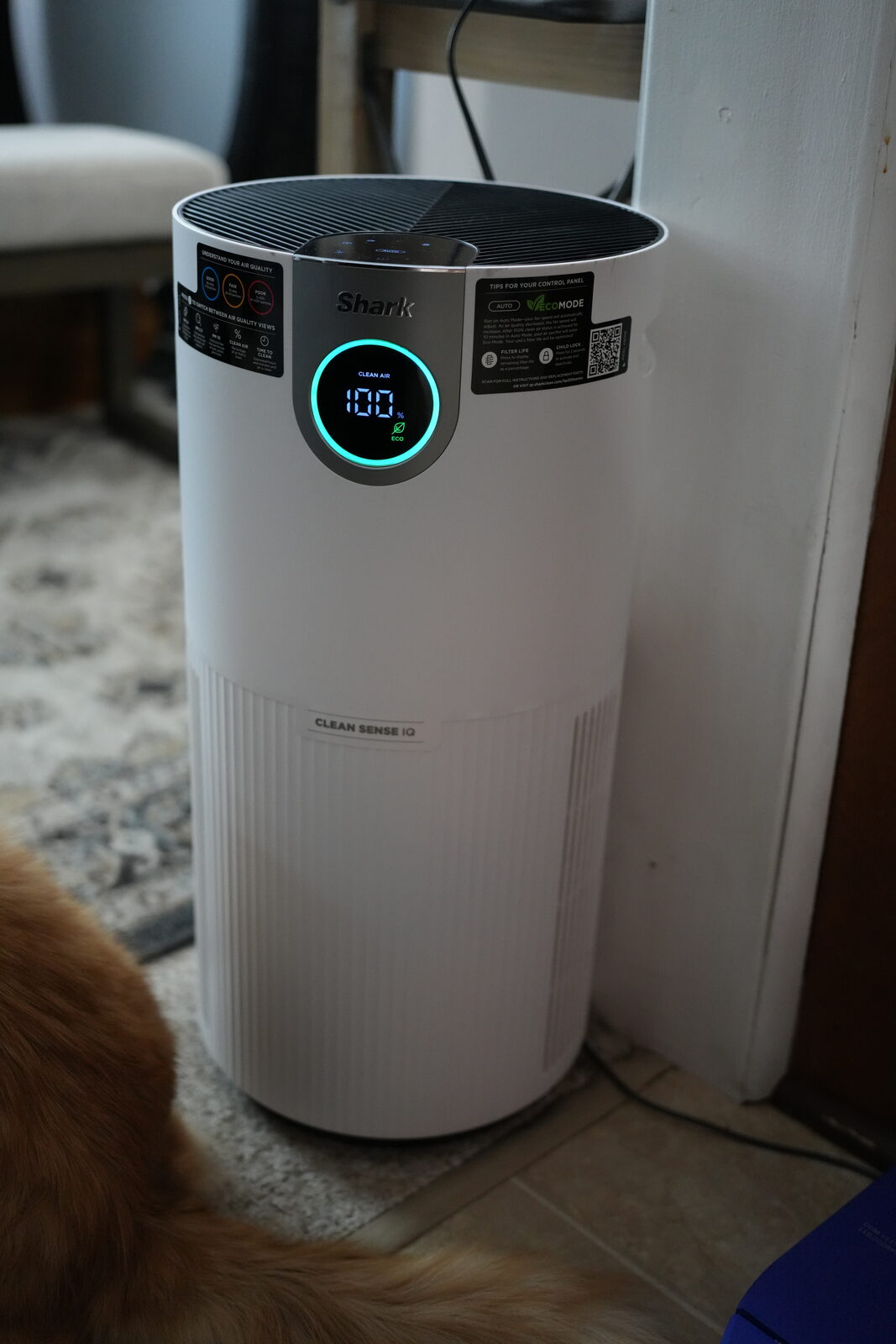
Any True HEPA purifier sized for the room will help with dander. The Shark HP200 covers 1,000 sq ft with NanoSeal HEPA rated to 99.98% of 0.1 to 0.2 micron particles, plus a carbon Odor Lock layer. Smaller rooms work fine with a LEVOIT Core 300S or 200S. The exact brand matters less than True HEPA filtration, a CADR rating that matches the room size, and a pre-filter you can clean.
Is there a product designed to catch cat hair on a household fan?
Not yet, not as a real consumer product. I'm working on it. Pillowcases catch some hair but kill airflow. Generic kid-safety fan covers are designed for keeping fingers out of fans, not fur. Vacuuming the blades works but only as long as you remember to do it. Drop your email above if you want to know when I have something real to recommend.
Does running an air purifier 24/7 help?
Yes, particularly with allergens. HEPA studies on Fel d 1 reduction show meaningfully lower allergen levels in sealed rooms with a properly-sized purifier running continuously. The cost is real (a Shark HP200 on auto pulls about 30W average), but for cat-allergic people in the home, it's worth it.
How often should I replace the filter in my air purifier?
Shark recommends every 6 to 12 months for the HE1FKPRO. In a cat home, plan on the shorter end. The pre-filter loads with hair fragments faster than the marketing numbers assume; vacuum it every few weeks to extend HEPA life.
Will a HEPA filter help with cat allergies?
It usually helps but doesn't eliminate them. The Fel d 1 allergen rides on dander particles that True HEPA filters capture well. People with mild-to-moderate cat allergies often see real improvement in rooms with a continuous HEPA unit. It is not a substitute for medication if your allergy is severe.